
Introduction
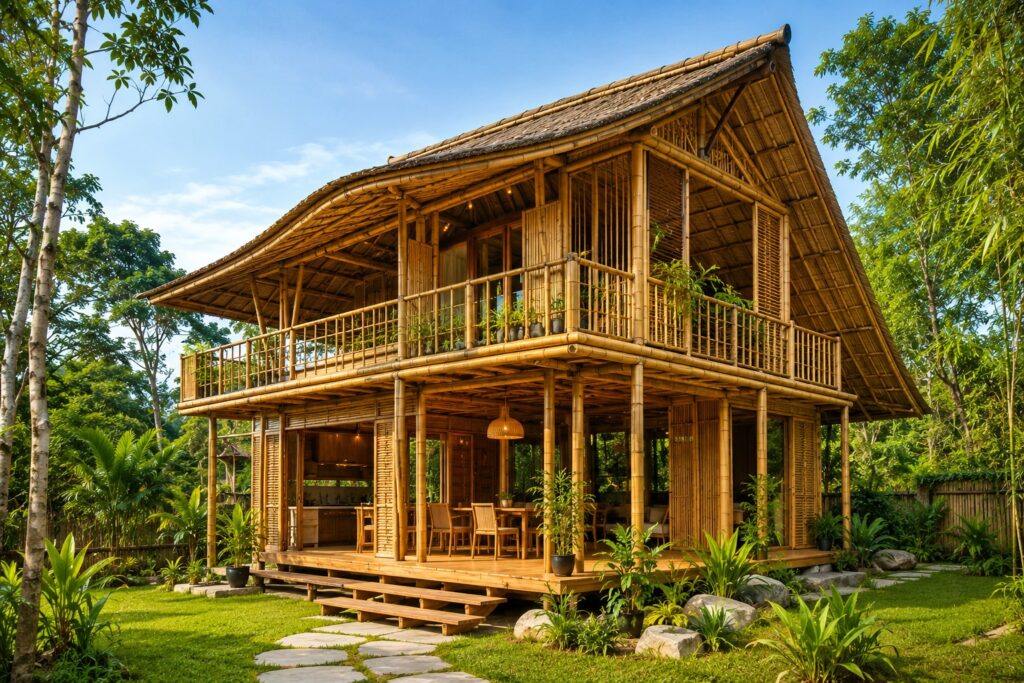
Bamboo House: As society prioritizes environmental sustainability, homes crafted from bamboo are quickly gaining recognition as a cutting-edge answer to modern housing needs. Combining natural beauty, environmental responsibility, and impressive structural strength, bamboo homes are transforming the way people think about residential design.
Historically viewed as a conventional regional resource, bamboo has transitioned into a center piece of modern sustainable design, gaining widespread adoption among global architects, consumers, and conservationists alike. With its renewable nature and stunning aesthetic appeal, a bamboo house represents the perfect balance between modern comfort and sustainable living.
Why the World Is Turning to Bamboo Construction
A Sustainable Alternative to Conventional Homes
One of the biggest reasons behind the growing popularity of bamboo houses is sustainability. Bamboo is among the fastest-growing plants on Earth, reaching maturity within just a few years compared to traditional timber, which can take decades.
Unlike many construction materials that require intensive manufacturing processes, bamboo naturally regenerates after harvesting, making it an environmentally responsible choice. Choosing a bamboo house helps reduce deforestation, lower carbon emissions, and support green building initiatives.
Exceptional Strength and Durability
The impressive load-bearing capacity of bamboo frequently defies common expectations. Certain bamboo species possess tensile strength comparable to steel, making them suitable for structural applications.
Modern bamboo houses are designed to withstand:
- Heavy rainfall
- Strong winds
- Earthquakes
- Tropical climates
- Long-term environmental exposure
With proper treatment and maintenance, bamboo structures can remain durable and attractive for decades.
Stunning Natural Aesthetics
Bamboo houses offer a unique architectural charm that blends seamlessly with nature. Their warm textures, organic patterns, and open designs create peaceful and inviting living spaces.
Popular design features include:
- Open-concept interiors
- High vaulted ceilings
- Natural ventilation systems
- Large windows with scenic views
- Eco-friendly landscaping
Whether built in urban areas, coastal regions, forests, or mountain retreats, bamboo homes provide a distinctive visual appeal that modern concrete structures often struggle to match.
Environmental Benefits of Bamboo Houses
Reduced Carbon Footprint
Bamboo absorbs large amounts of carbon dioxide throughout its growth cycle, helping combat climate change. The construction of bamboo houses generally requires less energy than traditional concrete or steel buildings, resulting in a significantly lower environmental impact.
Natural Energy Efficiency
Bamboo houses are naturally energy-efficient. By maximizing passive ventilation and heat regulation, this design cuts down on both electricity usage and reliance on artificial cooling.
Benefits include:
- Lower electricity consumption
- Improved indoor comfort
- Enhanced air circulation
- Reduced energy costs
This combination of sustainability and efficiency makes bamboo homes increasingly attractive in regions with warm climates.
Modern Innovations in Bamboo Architecture
Recent innovations in bamboo construction have elevated today’s dwellings well beyond the capabilities of legacy structures. Architects and engineers are incorporating cutting-edge techniques to improve durability, safety, and functionality.
Modern bamboo construction includes:
- Engineered bamboo panels
- Treated bamboo framing systems
- Hybrid bamboo and steel structures
- Smart home integrations
- Luxury eco-resort designs
These new developments have turned bamboo construction from a minor architectural concept into a popular choice for sustainable homes.
Financial Benefits of Bamboo Construction
Depending on the location, bamboo offers an affordable alternative for structural building. Its rapid growth and local availability often reduce material expenses while creating employment opportunities within local communities.
Additional economic benefits include:
- Lower construction costs
- Reduced maintenance expenses
- Faster building timelines
- Increased demand for eco-friendly properties
- Higher appeal in sustainable real estate markets
As consumer preference shifts toward sustainable architecture, bamboo construction is gaining traction as a durable, value-generating asset class.
Challenges and Considerations
While bamboo houses offer numerous benefits, successful construction requires proper planning and treatment. Untreated bamboo may be vulnerable to pests, moisture, and weather-related damage.
To maximize longevity, builders should focus on:
- Professional bamboo treatment methods
- Quality structural engineering
- Regular inspections and maintenance
- Compliance with local building regulations
When these factors are addressed, bamboo houses can provide exceptional performance and durability.
The Future of Bamboo Housing
As sustainability becomes a global priority, bamboo is poised to play a major role in the future of construction. Governments, architects, and developers are increasingly recognizing bamboo’s potential to address housing demands while minimizing environmental impact.
From affordable housing projects to luxury eco-resorts, bamboo houses are redefining modern architecture and inspiring a new generation of green building solutions.
Conclusion
A bamboo house is more than just a home—it is a statement of sustainable living, environmental responsibility, and architectural innovation. With its remarkable strength, natural beauty, energy efficiency, and eco-friendly credentials, bamboo offers a compelling alternative to traditional construction materials.
As the demand for greener lifestyles continues to grow, bamboo houses are set to become a cornerstone of sustainable architecture. Choosing bamboo as a primary building material allows residents to experience an unconventional living space while directly supporting long-term global environmental preservation.