
Introduction
Corporate Social Responsibility (CSR) activities have become an essential part of modern business practices. Today, companies are not only expected to generate profits but also contribute positively to society and the environment.
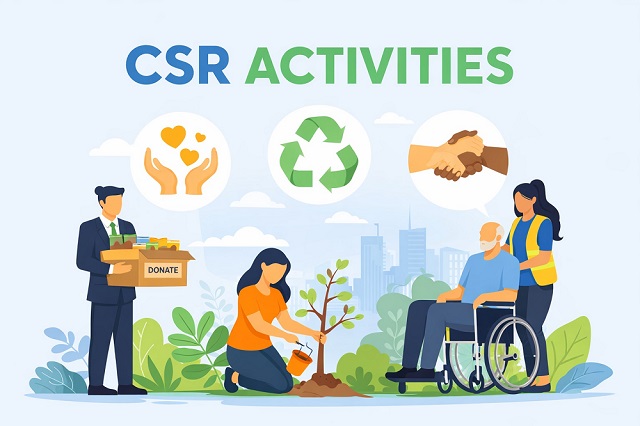
CSR activities help organizations build trust, improve brand value, support communities, and create sustainable growth. Businesses that actively participate in CSR demonstrate responsibility toward society, employees, customers, and the environment.
In this article, we will explore the meaning of CSR activities, their importance, types, benefits, and examples of successful CSR initiatives.
What Are CSR Activities?
CSR (Corporate Social Responsibility) activities are actions taken by companies to contribute to social welfare, environmental sustainability, and community development.
These activities go beyond business operations and aim to improve the quality of life for people and protect natural resources.
Simple Definition:
CSR activities are voluntary efforts made by businesses to support society and the environment.
Importance:
CSR activities play a crucial role in creating a balance between business growth and social development.
1. Improves Brand Reputation
Companies involved in CSR activities gain positive recognition. Customers trust brands that care about social issues.
Example:
A company that supports education programs builds goodwill among customers.
2. Strengthens Community Relationships
CSR helps businesses connect with local communities and understand their needs.
Benefits:
- Builds trust
- Enhances cooperation
- Creates long-term partnerships
3. Supports Environmental Protection
Many CSR initiatives focus on environmental sustainability.
Examples:
- Tree plantation drives
- Waste management programs
- Water conservation projects
4. Increases Employee Satisfaction
Employees feel proud to work for organizations that support social causes.
Benefits:
- Higher employee motivation
- Improved productivity
- Better workplace culture
5. Promotes Sustainable Development
CSR encourages responsible use of resources, ensuring long-term benefits for future generations.
Types:
CSR activities can be categorized into different areas based on their focus.
1. Environmental Activities
These activities focus on protecting the environment.
Examples:
- Tree plantation programs
- Recycling initiatives
- Renewable energy projects
- Water conservation campaigns
- Reducing carbon emissions
2. Educational Activities
Education-based CSR supports learning and development.
Examples:
- Providing scholarships
- Building schools
- Donating books and computers
- Supporting digital learning
3. Social Welfare Activities
These activities support community well-being.
Examples:
- Food distribution programs
- Healthcare camps
- Disaster relief support
4. Health-Related Activities
Health initiatives improve public health awareness and services.
Examples:
- Free medical camps
- Blood donation drives
- Vaccination programs
- Health awareness campaigns
5. Economic Development Activities
These initiatives focus on improving livelihoods.
Examples:
- Skill development programs
- Supporting small businesses
- Employment training
Examples:
Here are some real-world examples of CSR initiatives implemented by companies worldwide.
Example 1: Tree Plantation Drives
Many organizations conduct tree plantation campaigns to improve environmental conditions.
Benefits:
- Reduces air pollution
- Improves biodiversity
- Enhances environmental sustainability
Example 2: Supporting Education
Companies donate educational materials to underprivileged schools.
Benefits:
- Improves literacy
- Encourages learning
- Reduces education inequality
Example 3: Free Medical Camps
Healthcare companies organize medical camps in rural areas.
Benefits:
- Improves healthcare access
- Promotes disease awareness
- Enhances community health
Example 4: Water Conservation Programs
Water-saving initiatives help communities manage water resources effectively.
Examples:
- Rainwater harvesting
- Building check dams
- Awareness campaigns
Example 5: Food Donation Programs
During emergency periods and holiday seasons, many firms manage the allocation of food supplies to underprivileged communities.
Benefits:
- Reduces hunger
- Supports vulnerable communities
Benefits of CSR Activities for Businesses
CSR activities not only benefit society but also provide advantages to businesses.
1. Enhances Brand Image
Companies known for CSR earn respect and trust from customers.
2. Increases Customer Loyalty
Customers prefer brands that care about social causes.
3. Improves Employee Engagement
Employees feel motivated when participating in CSR programs.
4. Attracts Investors
Responsible businesses attract investors who value sustainability.
5. Reduces Business Risks
CSR promotes ethical practices and reduces legal risks.
CSR Activities in India
In India, CSR has become mandatory for certain companies under the Companies Act, 2013.
Companies meeting specific criteria must spend at least 2% of their average net profits on CSR activities.
Common CSR Activities in India
- Rural development programs
- Skill development training
- Sanitation and cleanliness drives
- Education support
- Women empowerment initiatives
How to Plan Effective CSR Activities
Organizations must follow a structured approach to implement CSR programs.
Step 1: Identify Community Needs
Understand local challenges such as:
- Education gaps
- Healthcare shortages
- Environmental issues
Step 2: Set Clear Objectives
Define:
- Goals
- Timeline
- Budget
Step 3: Partner with NGOs
Collaborate with experienced organizations for better implementation.
Step 4: Monitor and Evaluate
Track the progress and measure impact.
Step 5: Communicate Results
Share CSR achievements with stakeholders and the public.
Future Trends:
CSR activities are evolving with changing global needs.
Some emerging trends include:
- Digital education initiatives
- Climate change action programs
- Sustainable supply chains
- Renewable energy adoption
- Social entrepreneurship support
Key Takeaways
- CSR activities promote social responsibility and sustainability
- They benefit both society and businesses
- CSR strengthens brand value and trust
- Environmental, educational, and health programs are common CSR initiatives
- Effective planning ensures successful CSR implementation
Conclusion
CSR activities are no longer optional—they are essential for responsible business growth. By supporting social welfare, protecting the environment, and empowering communities, companies contribute to a better future.
Organizations that actively engage in CSR not only improve society but also strengthen their reputation, employee engagement, and long-term sustainability.
Responsible businesses create responsible societies.